Js Ract Cant Read State Updated in Fuction

Why React doesn't update state immediately
two min read 707
Despite React's popularity, i of its biggest drawbacks is its components re-rendering excessively. When developing React applications, you lot may have noticed that land updates don't immediately reverberate new values after being changed. React land is a plain JavaScript object that holds data that influences the output of a return.
When building your projection, if yous intend to modify any attributes of a React component in the future, you should store the attribute in a state. The country starts with an initial default value on mountain and is and so contradistinct later on as a result of a user's actions. Each React component manages its own state internally.
In this commodity, nosotros'll explore the reasons why React doesn't update state immediately. We'll run through an case and clarify what y'all should do when you demand to make changes to the new state in both class and part components. Allow'south get started!
How React performs state updates
To update state in React components, we'll employ either the this.setState function or the updater office returned by the React.useState() Hook in class and function components, respectively.
State updates in React are asynchronous; when an update is requested, there is no guarantee that the updates will be made immediately. The updater functions enqueue changes to the component land, only React may filibuster the changes, updating several components in a single laissez passer.
For instance, consider the code beneath:
//React const handleClick = () => { setName("Amaka") setAge(xx) setAddress("No 3 Rodeo drive") } In the code snippet above, at that place are three different calls to update and re-render the component. Calling the updater functions one afterward another and re-rendering both parent and kid components later on each phone call would be inefficient in well-nigh cases. For this reason, React batches state updates.
No matter how many setState() calls are in the handleClick event handler, they will produce only a single re-render at the cease of the issue, which is crucial for maintaining good functioning in big applications. The order of requests for updates is always respected; React volition ever treat the first update requests showtime.
Now that we've established that delaying reconciliation of updates requests in club to batch them is beneficial, there are likewise times when you need to await on the updates to practise something with the updated values. In the next department, we'll see how to practice that.
Carrying out operations with class components
setState() callback
The 2nd parameter to setState() is an optional callback function. This statement will be executed once setState() is completed and the component is re-rendered. The callback function is guaranteed to run after the land update has been applied:
//React handleSearch = (east) => { this.setState({ searchTerm: e.target.value },() => { // Do an API call with this.state.searchTerm }); } componentDidUpdate
The componentDidUpdate role is invoked immediately later on a country update occurs. To avoid an infinite loop, y'all should e'er use a provisional statement to be certain that the previous state and the electric current country are not the same:
//React componentDidUpdate(prevProps, prevState) { if (prevState.count !== this.country.count) { // Do something here } } Carrying out operations with part components
useEffect() Claw
You lot can perform side effects in the useEffect Hook when the state is updated. The country variable could be added as a dependency in this Claw, making it run when the land value changes. You can make the useEffect Hook mind to the state changes:
//React import React,{useState, useEffect} from 'react'; const App = () => { const [count, setCount] = useState(1); useEffect(() => { if (count > 5) { console.log('Count is more that v'); } else { console.log('Count is less that five'); } }, [count]); const handleClick = () => { setCount(count + one); }; render ( <div> <p>{count}</p> <button onClick={handleClick}> add </push> </div> ); }; consign default App; The callback role in the useEffect Hook runs only when the state variable provided as a dependency changes.
Conclusion
In React, every state update causes the component existence updated to re-render. Because re-rendering is an expensive operation, making state updates synchronously can cause serious functioning issues, for case, increasing load times or causing your application to crash. Past batching land updates, React avoids unnecessary re-renders, boosting functioning overall. I hope you enjoyed this article!
Full visibility into production React apps
Debugging React applications can be hard, peculiarly when users experience problems that are hard to reproduce. If you're interested in monitoring and tracking Redux state, automatically surfacing JavaScript errors, and tracking slow network requests and component load time, try LogRocket. 
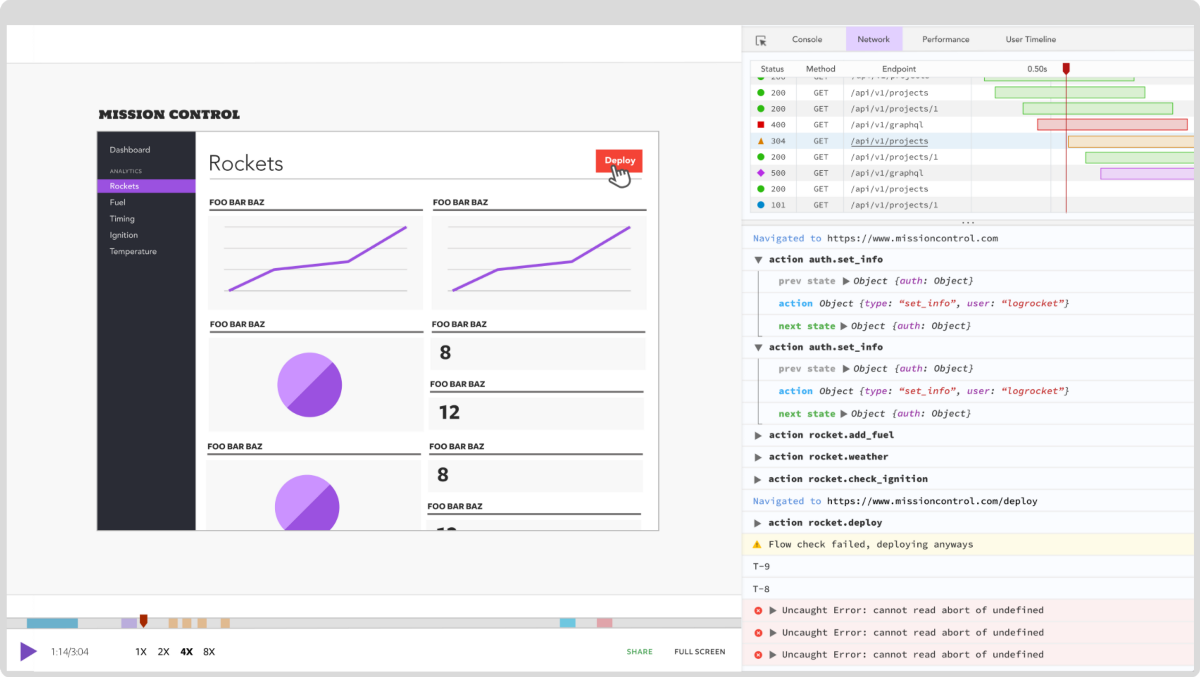
LogRocket is like a DVR for web and mobile apps, recording literally everything that happens on your React app. Instead of guessing why problems happen, yous can aggregate and study on what state your application was in when an issue occurred. LogRocket too monitors your app's performance, reporting with metrics like customer CPU load, client memory usage, and more.
The LogRocket Redux middleware package adds an actress layer of visibility into your user sessions. LogRocket logs all actions and state from your Redux stores.
Modernize how you debug your React apps — start monitoring for gratuitous.
warrenthatintopen.blogspot.com
Source: https://blog.logrocket.com/why-react-doesnt-update-state-immediately/
0 Response to "Js Ract Cant Read State Updated in Fuction"
Post a Comment